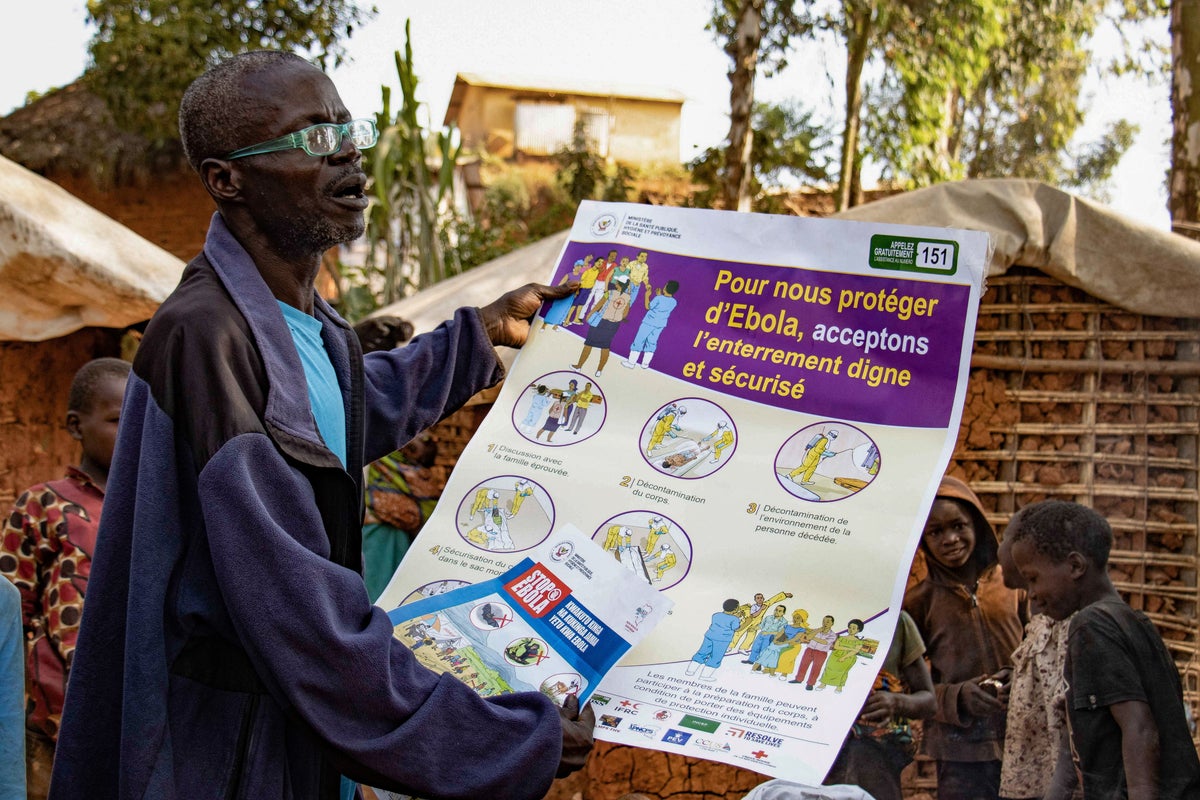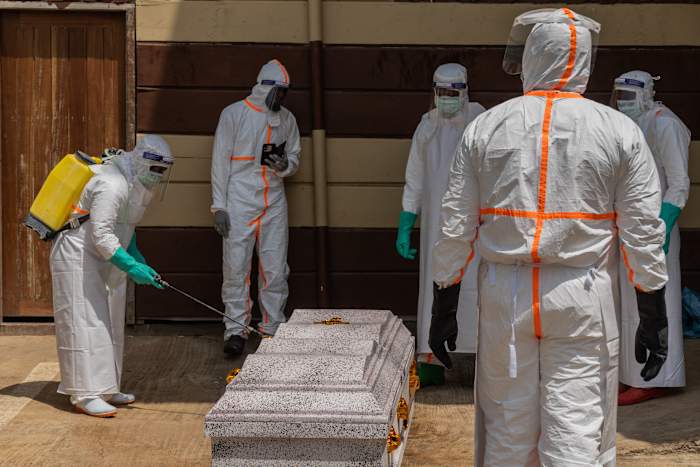
The numbers coming out of the Democratic Republic of the Congo right now should make you stop and look. On June 14, 2026, the Congolese Ministry of Health quietly dropped a bomb on social media. Confirmed Ebola cases in eastern Congo have spiked violently to 782, with the death toll hitting 181.
If you think you've seen this movie before, you haven't. This isn't your standard Ebola crisis. This time, we're dealing with a ghost in the system, a completely different beast that skips past our medical defenses.
The underlying reality is worse than the official data suggests. Health officials admitted that the 782 count is almost certainly an understatement. Why? Because the outbreak was only officially flagged on May 15, weeks after it actually started burning through villages. Even worse, contact tracing has plummeted to a measly 56%. That means nearly half the people exposed to this killer are walking around unmonitored.
The Blind Spot of Modern Medicine
Every major headline you've read about successful Ebola vaccines over the last decade applies to the Zaire strain of the virus. That strain was the culprit behind Congo's last 16 outbreaks. We got good at fighting it. We developed highly effective vaccines like Ervebo and targeted monoclonal antibody treatments.
This outbreak is caused by the rare Bundibugyo virus strain.
For the Bundibugyo virus, there is no approved vaccine. There is no approved antiviral treatment. Zero.
If you catch it, you're relying entirely on supportive care—intravenous fluids, oxygen, and luck. Right now, the data shows 56 people have documented recoveries, leaving the current fatality rate sitting at roughly 23%. While that's lower than the horrific 60% to 90% death rates seen with the Zaire strain, a virus with a one-in-four kill rate that we can't vaccinate against is a global health nightmare.
Why Containment is Failing in Ituri
The absolute epicenter of this disaster is Congo's eastern Ituri province. Ituri accounts for more than 90% of all confirmed cases, though the virus has already bled south into North Kivu and South Kivu. It has even slipped over the international border into Uganda.
Trying to run contact tracing in Ituri right now is practically impossible. Here's what field teams are up against.
- Mass Displacement: Warring armed groups have forced nearly a million people to flee their homes in Ituri. When people are constantly running for their lives from violence, they don't stay put for a 21-day medical observation window.
- The Miner Migration: The region is rich in minerals. Thousands of informal, artisanal miners constantly drift between isolated, deep-forest mining sites. They carry the virus into places that have no phone service, let alone health clinics.
- Deep Logistics Nightmares: We're talking about dense tropical forests and washed-out dirt tracks. Reaching a single remote village where a case was flagged can take medical teams days of trekking.
- Community Resistance: Armed conflict in hot spots isn't the only danger. Local skepticism remains incredibly high. Health workers are facing actual physical attacks from angry, terrified residents who don't trust government or foreign intervention.
The Geopolitical Backfire
The international response is already messy. Last month, Washington officials floated a plan to route any Americans exposed to Ebola while abroad to a brand-new, 50-bed quarantine facility at the Laikipia Air Base in Kenya instead of flying them back to the United States.
It backfired immediately. The announcement triggered fierce local protests in Kenya over fears of bringing the lethal pathogen onto their soil. Local courts stepped in and halted the entire construction plan.
While Western countries bicker over where to build walls, the virus is moving. The World Health Organization noted that while testing capacity has improved to clear sample backlogs, the response is fundamentally lagging behind the transmission speed.
What Happens Next
This isn't an isolated African problem. It never is. When international tracking drops to 56% in a war zone, the window to prevent a massive regional crisis shrinks by the hour.
If you want to track how this unfolds or see how international aid agencies are routing resources to combat the Bundibugyo strain, keep your eyes on the daily operational updates from the World Health Organization (WHO) and the European Centre for Disease Prevention and Control (ECDC). They are currently tracking the geographic expansion of health zones, particularly around the urban hubs of Bunia and the Kampala metropolitan area in Uganda. The next 14 days will determine whether this outbreak stays contained to East Africa or turns into a prolonged global emergency.